
Galleri® Multi-Cancer Early Detection Test
Screens for a signal shared by 50+ types of cancer, from one blood draw.


At a glance
- Collection
- Blood drawAt one of 2,000+ Quest locations nationwide.
- Who it’s for
- Adults 50 and olderOr 22 to 49 with one or more risk factors.
- Results
- 2-4 weeksApproximately 2-4 weeks after your sample arrives.
- Payment
- FSA / HSA acceptedPay at checkout.
Why Galleri®
Galleri looks for a signal shared by 50+ cancers. A negative result doesn't rule out cancer. Keep up recommended screenings.
Galleri® is a multi-cancer, in-person early detection test that screens for many aggressive cancers before they become symptomatic. When there is a Cancer Signal Detected, results also provide a predicted Cancer Signal Origin to help your healthcare provider determine the next steps for diagnosis. Galleri is a laboratory-developed test and has not been cleared or approved by the FDA.
- Detects a signal for 50+ cancers
- Looks for DNA shed by cancer cells
- Supported by clinical studies
- In-person blood draw at Quest
For adults with an elevated risk for cancer, such as those 50 or older. Not recommended if you’re pregnant, 21 or younger, or in active cancer treatment.
Real Galleri® stories
Lymphoma was hiding in plain sight for Cindy. Individual results not typical.
Hear Cindy’s story in her own words.

Early answers, more reassurance
50+ types of cancer screened
Galleri® analyzes methylation patterns on cell-free DNA (cfDNA) to look for a unique cancer signature, checking hundreds of thousands of methylation sites. When it detects what could be cfDNA from cancer, it identifies the most likely Cancer Signal Origin to help guide the diagnostic workup.
cancer types
Head, neck, and respiratory
- Larynx
- Nasal cavity and paranasal sinuses
- Nasopharynx
- Oropharynx (p16-) and hypopharynx
- Oropharynx (HPV-mediated, p16+)
- Soft tissue sarcoma of the head and neck
- Oral cavity
- Lung
- Malignant pleural mesothelioma
Reproductive and urinary
- Uterus (carcinoma, carcinosarcoma, sarcoma)
- Vulva
- Cervix
- Gestational trophoblastic neoplasms
- Vagina
- Testis
- Penis
- Prostate
- Ovary, fallopian tube, and primary peritoneum
- Kidney
- Urinary bladder
- Ureter and renal pelvis
- Adrenal cortical carcinoma
Digestive and gastrointestinal
- Esophagus and esophagogastric junction
- Stomach
- Lower digestive
- Pancreas (exocrine)
- Ampulla of Vater
- Gastrointestinal stromal tumor
- Bile ducts (distal, intrahepatic, perihilar)
- Gallbladder
- Liver
- Colon and rectum
- Small intestine
- Anus
- Appendix carcinoma
Skeletal and neuroendocrine
- Bone
- Soft tissue sarcoma
- Abdomen
- Thoracic visceral organs
- Trunk and extremities
- Unusual histologies and sites
- Retroperitoneum
- Neuroendocrine tumors
- Appendix
- Colon and rectum
- Pancreas
Breast and skin
- Melanoma of the skin
- Merkel cell carcinoma
- Breast
Blood and lymphatic
- Leukemia
- Lymphoma (Hodgkin and non-Hodgkin)
- Plasma cell myeloma and plasma cell disorders
Evaluated in a large clinical study, the Galleri® test screened for a signal shared by 50+ types of cancer.
Who should take this test?
The Galleri® test is recommended for use in adults with an elevated risk for cancer, such as those aged 50 or older. It’s intended to be used in addition to, and not replace, other cancer screening tests your healthcare provider recommends.
Adults 50 and older
- Cancer risk rises with age for everyone, so Galleri® is recommended from 50, whatever your family history.
Adults 22 to 49 with a risk factor
- Such as smoking, obesity, a personal or family history of cancer, a genetic predisposition, or an immune or inflammatory condition.
Not recommended if you are
- Pregnant, 21 or younger, or in active cancer treatment.
Ask about this test
Not sure this is the right test?
Ask me about Galleri®: who it’s for, what your result could show, or how it fits with your other screenings.
AI-generated. For information only, not medical advice. Call 911 for an emergency.
What can I expect from my results?
You will receive your test result approximately 2-4 weeks after your sample arrives. There are two possible results.
No Cancer Signal Detected Galleri looks for a signal shared by 50+ cancers. A negative result doesn't rule out cancer. Keep up recommended screenings.
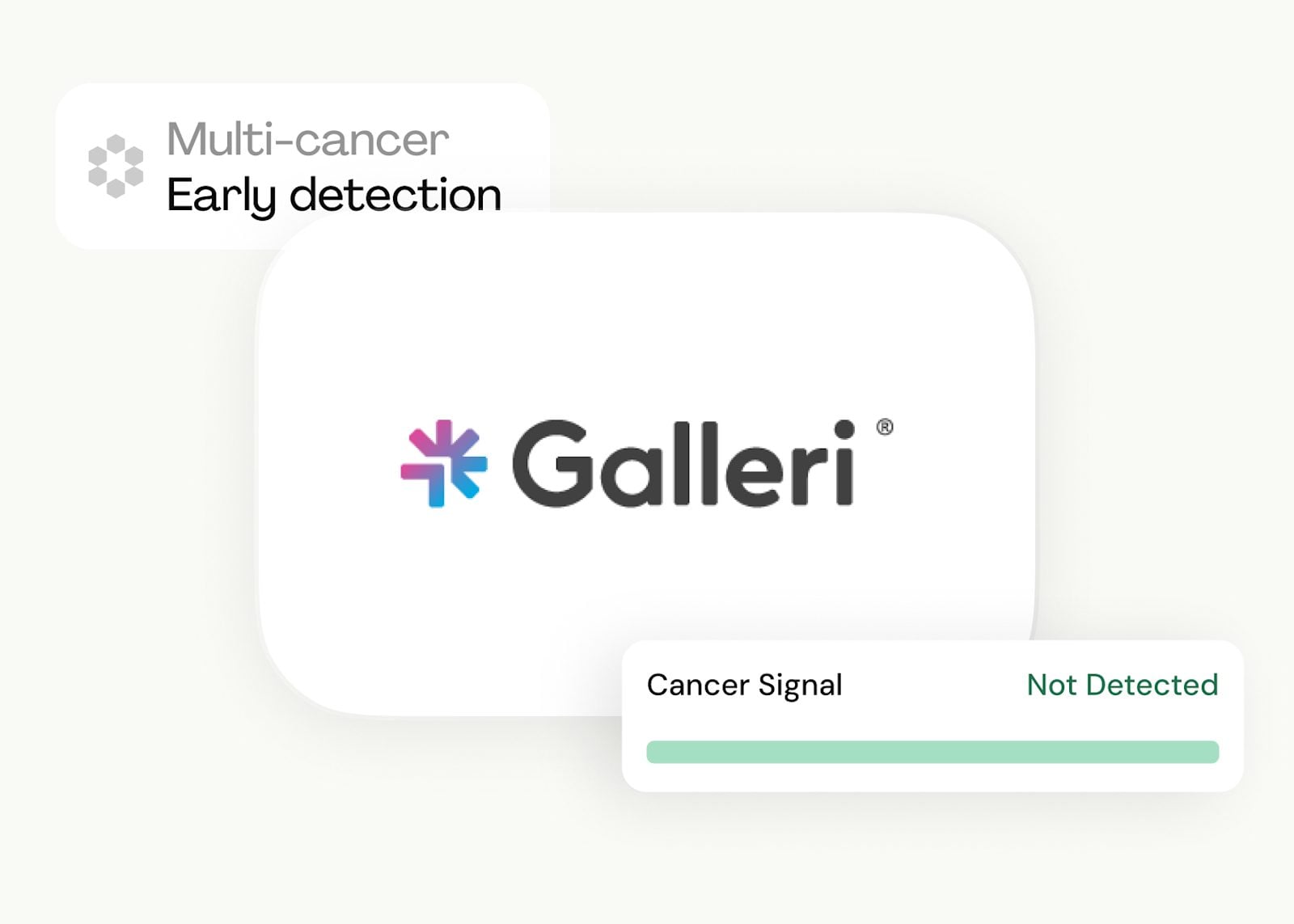
Multi-cancer screening in three steps
Step 1
Request your test
Once you request your test, a provider will review and send your lab order to Quest Diagnostics if the test is right for you.
Step 2
Schedule your blood draw
Instantly book your sample collection appointment at one of 2,000+ Quest locations nationwide.
Step 3
Get answers
Test results are ready approximately 2-4 weeks after your sample arrives.

Galleri looks for a signal shared by 50+ cancers. A negative result doesn't rule out cancer. Keep up recommended screenings.
- One blood draw screens for a signal shared by 50+ types of cancer.
- HSA and FSA eligible, so you can pay using pre-tax dollars.
- Flexible payment plans are available.

Related tests
Questions
Common questions.
Anything else, our care team answers by phone or email.
Galleri® is a multi-cancer early detection test that can be taken as a single annual blood test and screens for many of the deadliest cancers before they become symptomatic. Galleri looks for a signal shared by 50+ cancers. A negative result doesn't rule out cancer. Keep up recommended screenings.
In a clinical study, the Galleri® test was able to detect a signal shared by more than 50 types of cancer.
The Galleri® test does not detect a signal for all cancers and not all cancers can be detected in the blood. False positive and false negative results do occur, meaning the result either indicates a cancer signal with no cancer found in the diagnostic workup or the test result indicates no cancer signal detected but the individual does in fact have cancer. The Galleri® test should be used in addition to healthcare provider recommended screening tests.
Cancers growing in the body shed DNA into the bloodstream. Although there are many types of cancer, the DNA fragments can act like a unique “fingerprint” of cancer. The Galleri® test screens for many of the deadliest cancers before they become symptomatic, including those without recommended screening tests. When there is a Cancer Signal Detected, the results also provide predicted Cancer Signal Origin to help your healthcare provider determine the next steps for diagnosis.
The Galleri® test is recommended for use in adults with an elevated risk for cancer, such as those aged 50 or older. It is intended to be used in addition to, and not replace, other cancer screening tests your healthcare provider recommends.
Use of Galleri® is not recommended in individuals who are pregnant, 21 years old or younger, or undergoing active cancer treatment.
For people 22 to 49 years of age, one or more of the following risk factors is required:
- Smoking
- Cancer survivor
- Overweight or obesity
- Family history of cancer
- Genetic predisposition
- Occupational exposure
- Environmental exposure
- Autoimmune inflammatory conditions
- Non-autoimmune inflammatory conditions
- Immunodeficiencies
- Solid organ transplant
People over the age of 50 have a 13 times higher risk for cancer than those under 50. Cancer risk increases for everyone as they age, regardless of family history: only 5% to 10% of cancers are caused by inherited risks.
The Galleri® test is recommended for use in adults with an elevated risk for cancer, such as those aged 50 or older. Talk to your provider about your risk for cancer, and whether the Galleri® test is right for you.
In a clinical study, Galleri® detected a signal shared by over 50 types of cancer, including some fast-spreading and aggressive cancers responsible for approximately two-thirds of cancer deaths. Galleri® is a cancer screening test, meaning it looks for cancer before symptoms appear. The Galleri® test does not detect a signal for all cancers and not all cancers can be detected in the blood. False positive and false negative results do occur.