Trichomoniasis Test
A urine test for trich, for men and women.
- Free shipping, both ways
- FSA / HSA accepted, or pay over time
- Ships to every state except New York
About this test
Our at-home lab test checks for the sexually transmitted infection trichomoniasis. If your results are positive or abnormal, you’ll be able to connect with a member of our independent physician network at no additional cost and may be eligible for treatment, if applicable.
- Measures presence of Trichomonas vaginalis
- Urine sample collection

Who should take this test?
Anyone with a sexual partner(s) with known trichomoniasis should be tested, as should anyone who has had unprotected sexual contact with a partner whose sexual health status is unknown. Trichomoniasis is the most common curable sexual infection in the U.S., estimated to infect over 2 million people a year. Individuals who’ve had trichomoniasis before have a 20% chance of reinfection within a few months of initial diagnosis. While many people actually don’t experience trichomoniasis symptoms, if you’re sexually active, regular testing is a simple way to confirm your status, keep yourself healthy, and prevent the spread of STIs (or STDs).
Groin
- Discomfort with urination
Reproductive
- Foul/fishy-smelling vaginal discharge
- Greenish/yellowish/frothy vaginal discharge
- Vaginal itching
- Vaginal bleeding
- Penile discharge
- Penile itching
- Painful intercourse
What does this test measure?
Your test results will tell you whether or not you’re infected with trichomoniasis, commonly called “trich.” If your results are positive or abnormal, you’ll be able to connect with our independent physician network at no additional cost.
- Trichomoniasis
- Trichomoniasis is a common infection caused by a microscopic protozoan parasite called Trichomonas vaginalis. Most people who have a trichomoniasis infection (about 70%) don’t develop symptoms. This infection is most commonly seen as a vaginal infection. Penile infections are possible, but uncommon.
What’s in the box
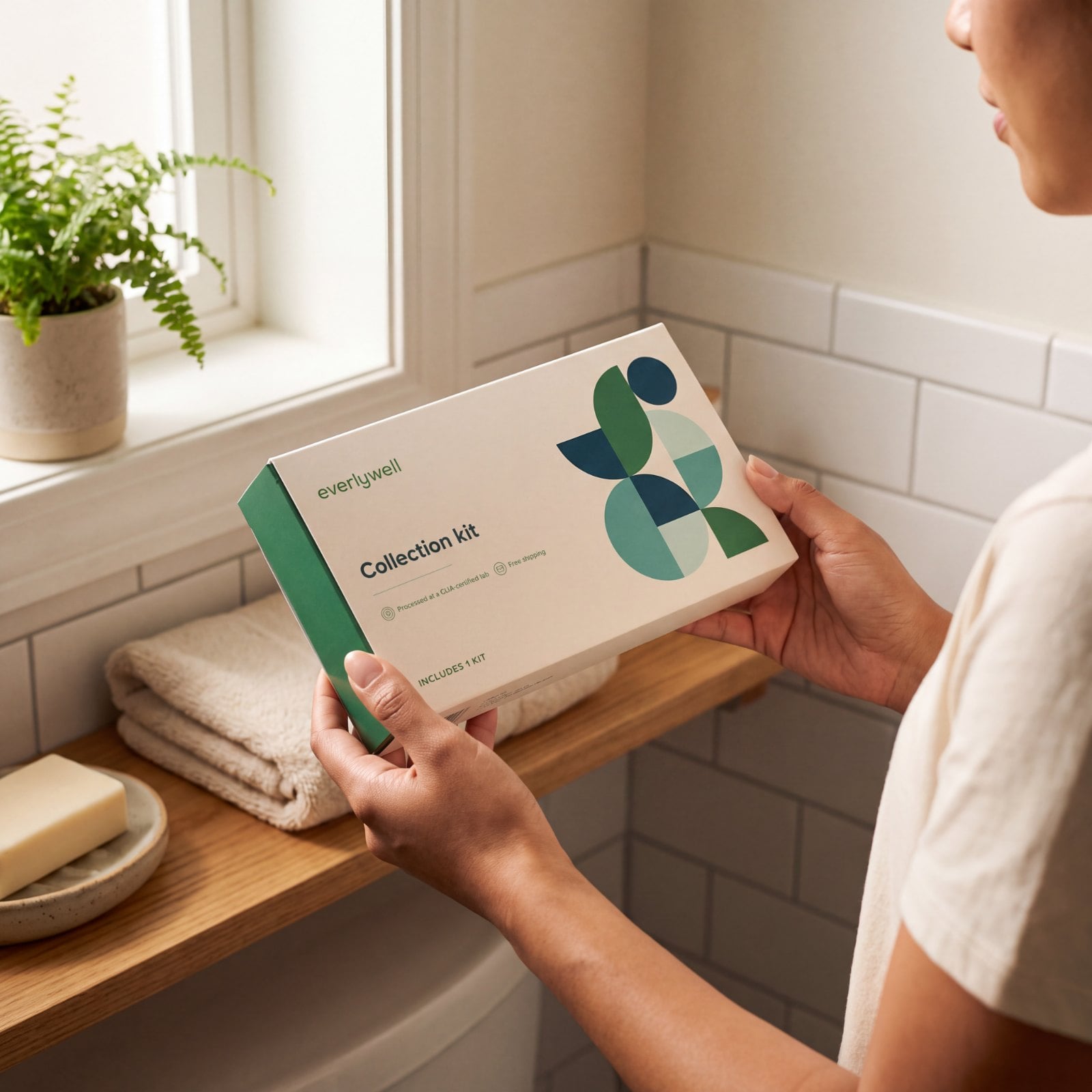
Everything you need to collect your sample and send it back, with free shipping both ways.
Collection cup
For a urine sample. The steps say when to collect and how long to hold.
Transfer tube and pipette
Move the sample into the sealed tube that travels to the lab.
Biohazard bag
The tube goes in here, then into the mailer.
Prepaid return mailer
Addressed to the lab. Drop it in any USPS mailbox, ideally the same day.
Instructions and kit ID
Register the ID online before you collect, so your results reach your account.
Four steps, from your door to your results

- Day 1
Order and time it right
Order online and your kit ships free in discreet packaging. Some infections take time to show up on a test, so testing too soon after an exposure can miss one.
- Days 2 to 7
Register, collect, and ship
Register your kit ID online, then collect a urine sample in the cup and move it to the tube with the pipette, following the kit’s steps. Mail it back with the prepaid label.
- Days 10 to 14
Get your results
Physician-reviewed results post to your secure account, with a positive or negative result for trichomoniasis. Only you can see them.
- After your results
Know your next step
If your result is positive, a clinician from our independent network reaches out about next steps, at no additional cost. Don’t try to treat an STI on your own.
Trich is a common STI that often has no symptoms. This test is for men and women.
What your results tell you
Each infection is reported as positive or negative, with what to do next.
- A clear positive or negative result for each infection
- If a result is positive, a clinician from our independent network reaches out about next steps
- Guidance on when to retest and how to talk with partners
- Results you can share with your healthcare provider
Clinical-grade testing, from the comfort of home.
From the lab to your report, every step of our process meets the gold standard in medical testing.
CLIA-certified labs
Every lab we partner with is certified under the Clinical Laboratory Improvement Amendments, meeting both state and federal standards with regular independent inspections.
We protect your health data
We protect your health data with encryption and do not sell it. Some results must be reported to public health authorities by law. See our Privacy Notice.
Rigorous quality assurance
All partner labs run regular internal quality checks, participate in proficiency testing, and comply with federal and state lab regulations.
Clinician-reviewed reports
Results are reviewed by an independent, licensed clinician.
Related tests
Questions
Common questions.
Anything else, our care team answers by phone, text, or email.
The results of this test will tell you whether your sample was positive or negative for the presence of Trichomonas vaginalis genetic material, which indicates a trichomoniasis infection. If your results are positive or abnormal, a member of our Care Team will contact you regarding next steps, and you may be eligible for treatment.
The Trichomoniasis Test for men and women checks whether or not you test positive for a trichomoniasis infection. In the event that your test results are abnormal, a board-certified physician in your state will contact you at no additional cost to discuss your particular case and prescribe medication where applicable.
In rare cases you may not receive a definitive result because of early infection or inadequate sampling, and repeat testing is recommended. Don’t take a chance on your sexual health. Know where you stand with our at-home lab Trichomoniasis Test.
Trichomoniasis is a sexually transmitted infection (STI, also called an STD) caused by Trichomonas vaginalis. Trichomonas vaginalis, or TV, is a microscopic parasite called a protozoan that lives in moist environments in the human body, such as the genitourinary tract. If you have had sexual intercourse with an infected person without a barrier method such as a condom, you may be at risk of contracting this infection.
An untreated trichomoniasis infection can last for weeks, months, or even years. This infection is very unlikely to go away on its own.
Vaginal trichomoniasis symptoms can include a yellow or green vaginal discharge, pain during sexual intercourse, painful urination, or vulval itching. Trichomoniasis often has no penile symptoms. Men who do have symptoms often experience inflammation of the urethra, which can result in pain while urinating.
Pregnant women who are infected with trichomoniasis are more likely to have a preterm delivery and deliver a low birth-weight newborn.
A trichomonas infection is treated with antibiotic medications like metronidazole or tinidazole. Only a healthcare provider can prescribe the appropriate medication based on specific patient results and medical history.
Note: If you get a positive result on this test, our independent physician network partner will contact you to schedule a consultation at no additional cost, so you can discuss your results with a board-certified physician in your state. When appropriate, and at the physician’s discretion, you may be offered a prescription for antibiotic medication.
This at-home Trichomoniasis Test uses the nucleic acid amplification technique to screen for trichomoniasis. This technique uses a urine sample to detect genetic material, or RNA, that’s unique to the Trichomonas parasite, making it a highly accurate testing method.
Trich testing can be done in several different ways, including nucleic acid amplification tests (or NAATs), wet mount microscopy, and antigen tests.
- A nucleic acid amplification test (or NAAT) can detect Trichomonas in urine, in both women and men, with a high level of accuracy. This kind of test identifies the genetic material of Trichomonas and is the gold standard for trichomoniasis testing. The Everlywell Trichomoniasis Test uses this method.
- Screening for Trichomonas by wet mount microscopy is based on microscopic examination of a vaginal smear or “wet prep” made from a vaginal swab. Identifying Trichomonas in a wet prep requires a skilled microscopist who looks for actual Trichomonas parasites in the vaginal swab sample. This screening method has several drawbacks. For example, it can’t reliably detect Trichomonas parasites in urine samples, making it an ineffective method for trichomoniasis screening in men.
- Antigen tests often use a test strip coated with specific proteins (called antibodies) that lock onto certain molecules (antigens) found in the Trichomonas parasite. When that happens, the test strip changes color or changes in some other way, indicating the presence of Trichomonas. Antigen tests, however, usually can’t be used to check for trichomoniasis in men.