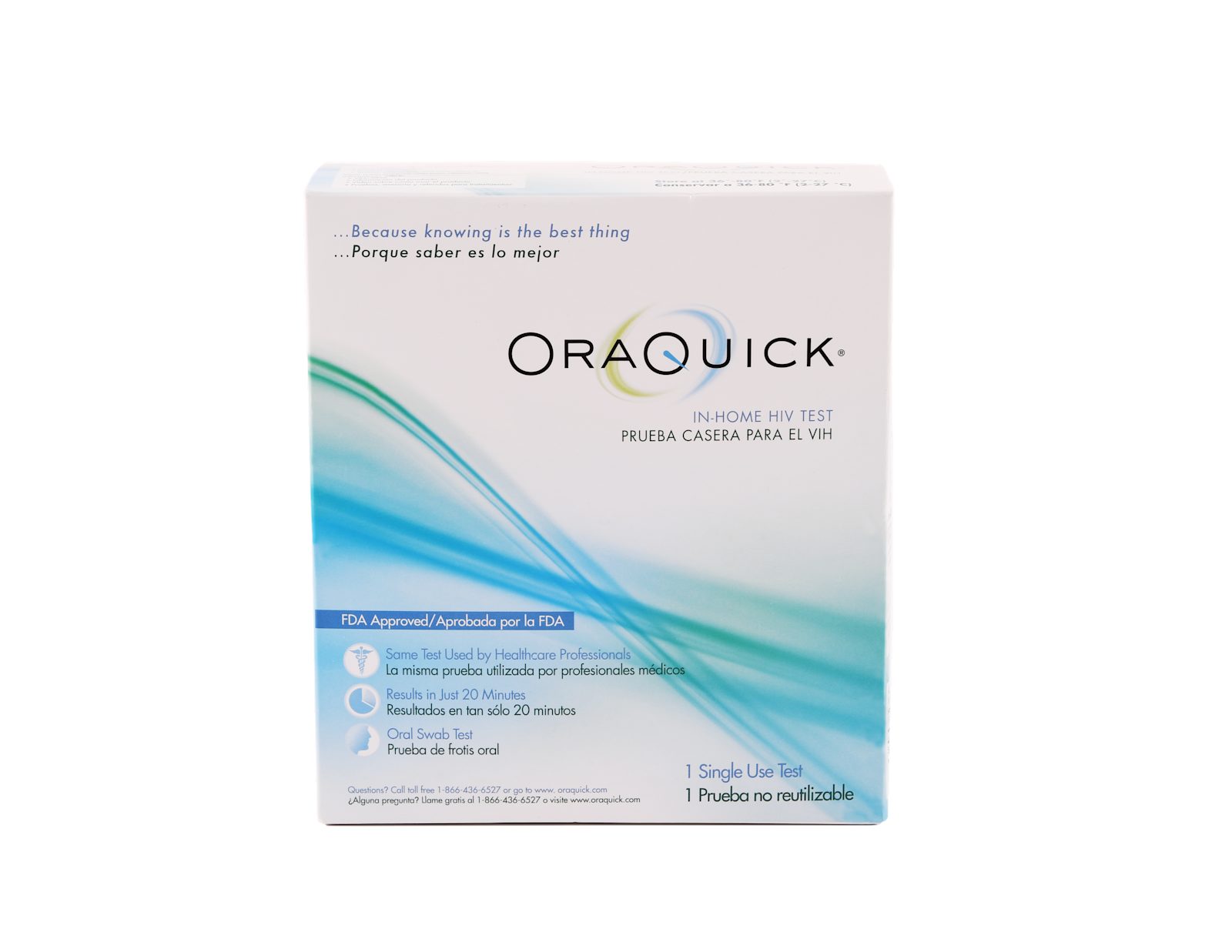
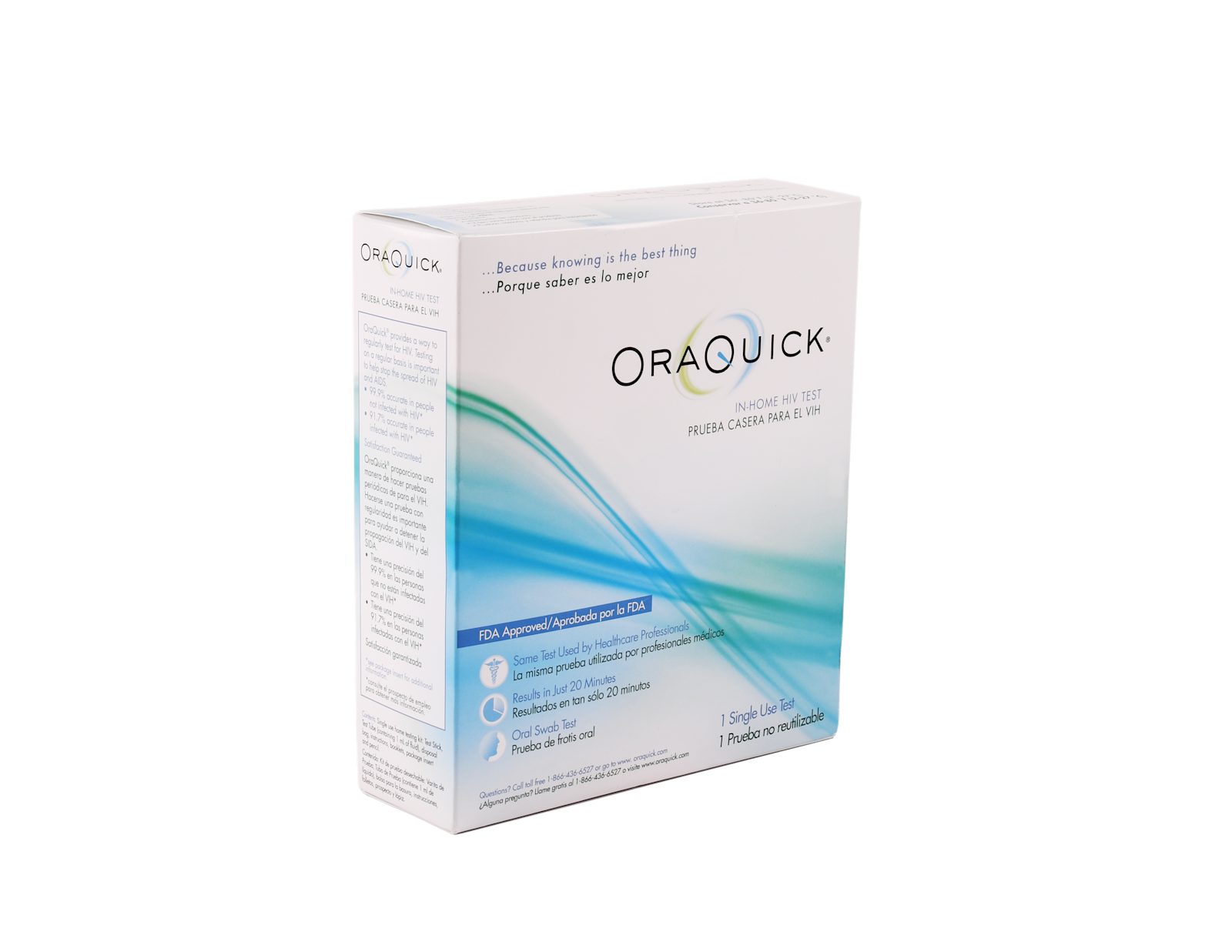
OraQuick® At-Home HIV Test Kit
An oral swab test for HIV, with results in 20 minutes.
At a glance
- Collection
- Oral swabA swab of your upper and lower gums. No blood needed.
- Time
- About 40 minutesSwab, wait 20 minutes, then read before the 40-minute mark.
- Results
- 20 minutesYou read them yourself, at home. Nothing to mail back.
- Shipping
- Free shippingShips to your door in discreet packaging.
About this test
The OraQuick® At-Home HIV Test is an oral swab test for HIV-1 and HIV-2 that does not require blood. This test works by looking for your body’s response (antibodies) to fighting the HIV virus. A positive result is preliminary and follow-up confirmatory testing is needed.
- FDA-approved, over-the-counter HIV test for quick, private at-home testing
- Get results in 20 minutes, with access to 24/7 connection to care
- Measures HIV-1 and HIV-2 antibodies
- Oral swab sample collection

Who should take this test?
The CDC recommends everyone between the ages of 15 and 65 be screened for HIV at least once. Many HIV infections have no symptoms, but a few weeks after infection, some may appear:
Body
- Muscle aches
- Chills
- Fatigue
- Fever
- Night sweats
Neck
- Sore throat
- Swollen lymph nodes
Skin
- Rash
- Skin issues
What does this test measure?
This oral fluid test looks for your body’s antibody response to fighting the HIV virus. Your result tells you whether HIV-1 and/or HIV-2 antibodies (immunoglobulin G) are present or absent. A positive result is preliminary and does not necessarily mean you have HIV: seek confirmatory testing in a medical setting like a clinic or doctor’s office, or consider an in-person HIV test through Everlywell.
- HIV-1 and HIV-2 antibodies
- HIV (human immunodeficiency virus) is a virus spread by exposure to blood or bodily fluids, such as those present during sexual intercourse. The virus attacks and impairs immune cells, causing progressive weakness of the immune system. HIV can progress to a condition called acquired immunodeficiency syndrome, or AIDS.
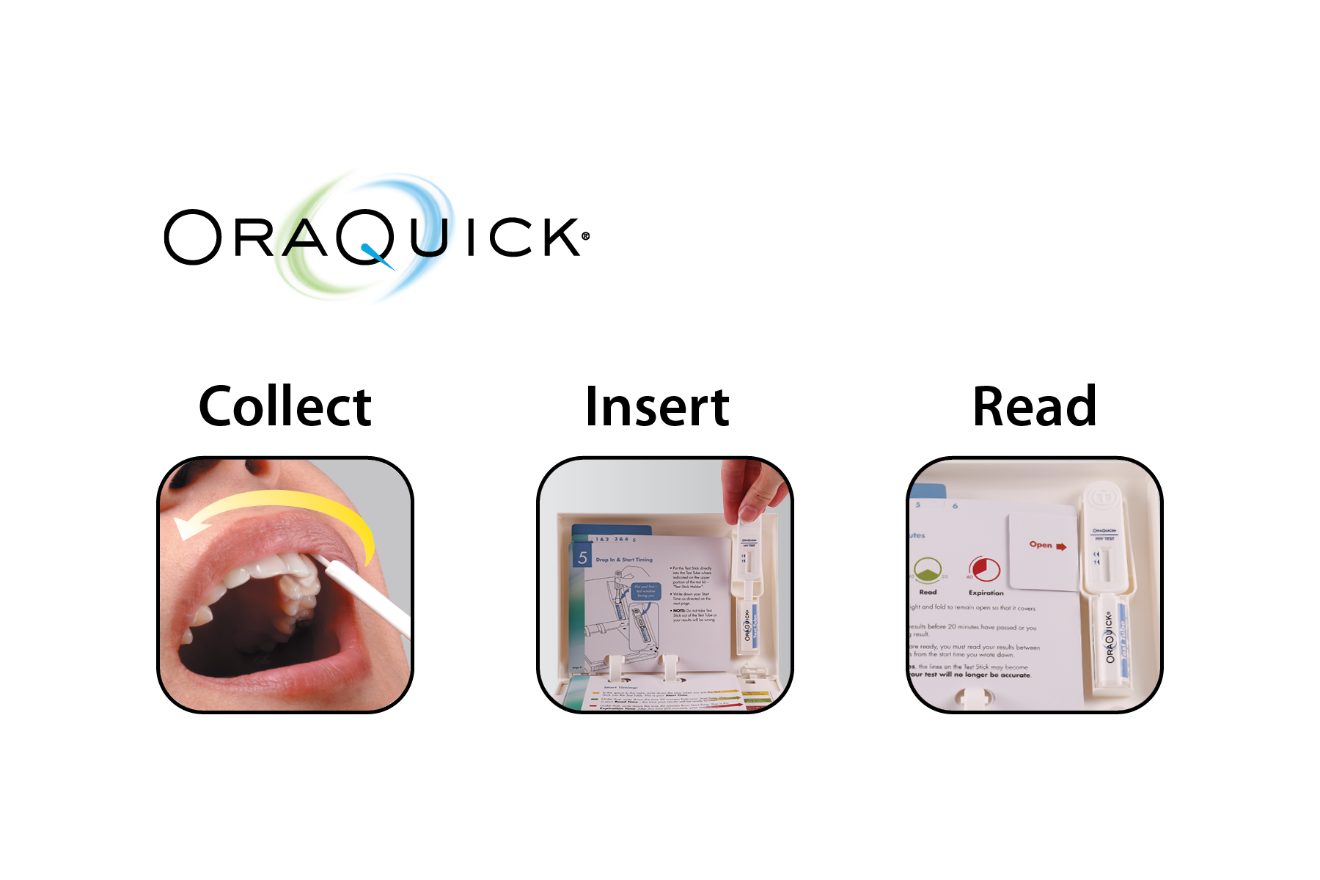
Results in 3 easy steps
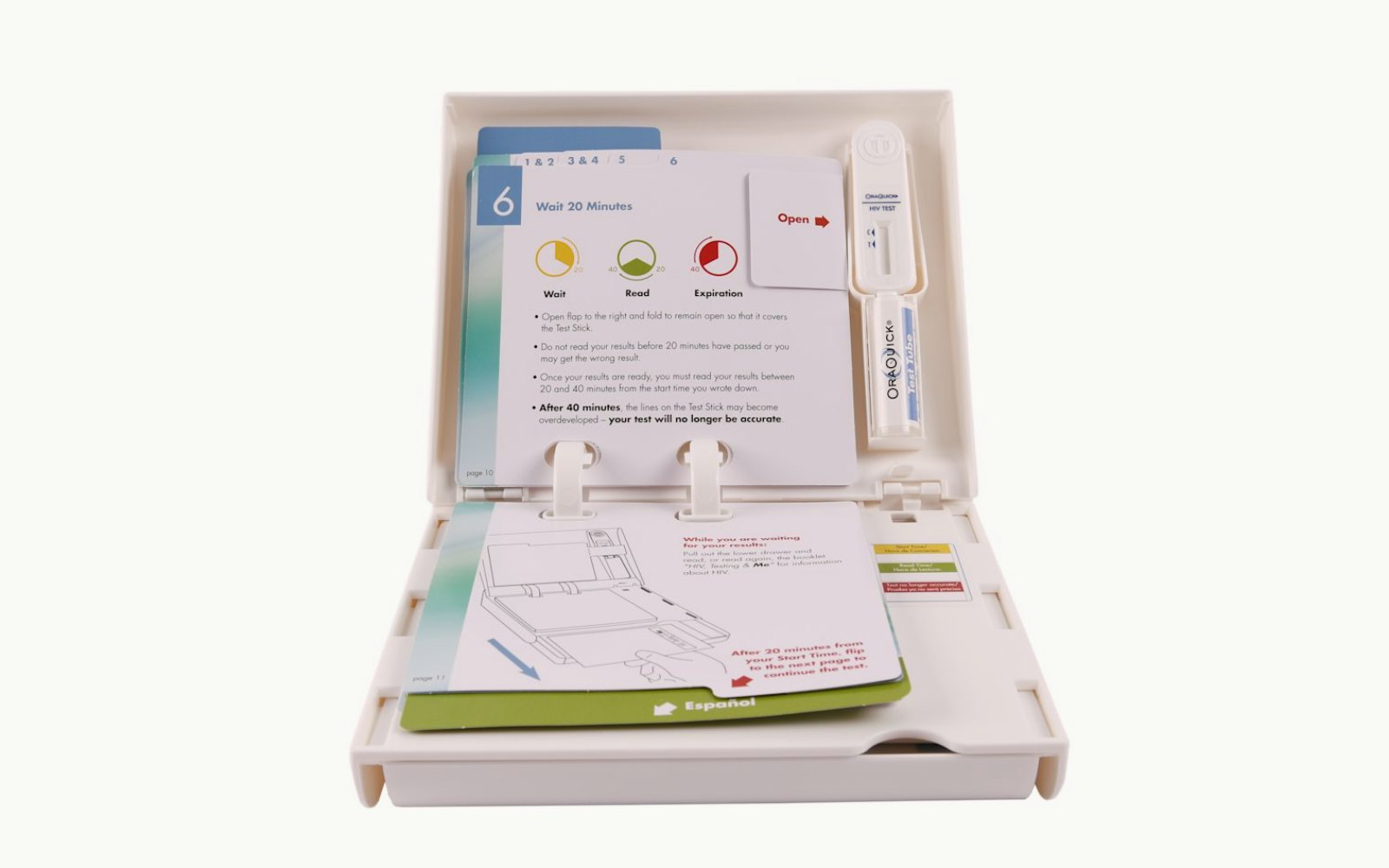
- Start
Swab your gums
Place the flat pad above the teeth against the outer gum. Gently swab completely around the outer gums, both upper and lower, one time around, using the flat pad.
- Wait 20 minutes
Insert the test into the tube
Insert the flat pad of the test stick into the bottom of the test tube, then start timing the test: 20 minutes.
- Minutes 20 to 40
Read your result
Pink fluid travels up to the “T” and “C” result window, then disappears as the test develops. Read your result after 20 minutes, but not more than 40 minutes.
It can take up to 3 months for your body to make HIV antibodies, so this test may not detect an infection from the last 3 months.
What your results tell you
You read your result at home, in the test’s result window. There’s nothing to mail back.
- A result in 20 minutes, read between 20 and 40 minutes after you start
- Whether HIV-1 and/or HIV-2 antibodies were found in your sample
- A positive result is preliminary: follow up with confirmatory testing in a medical setting
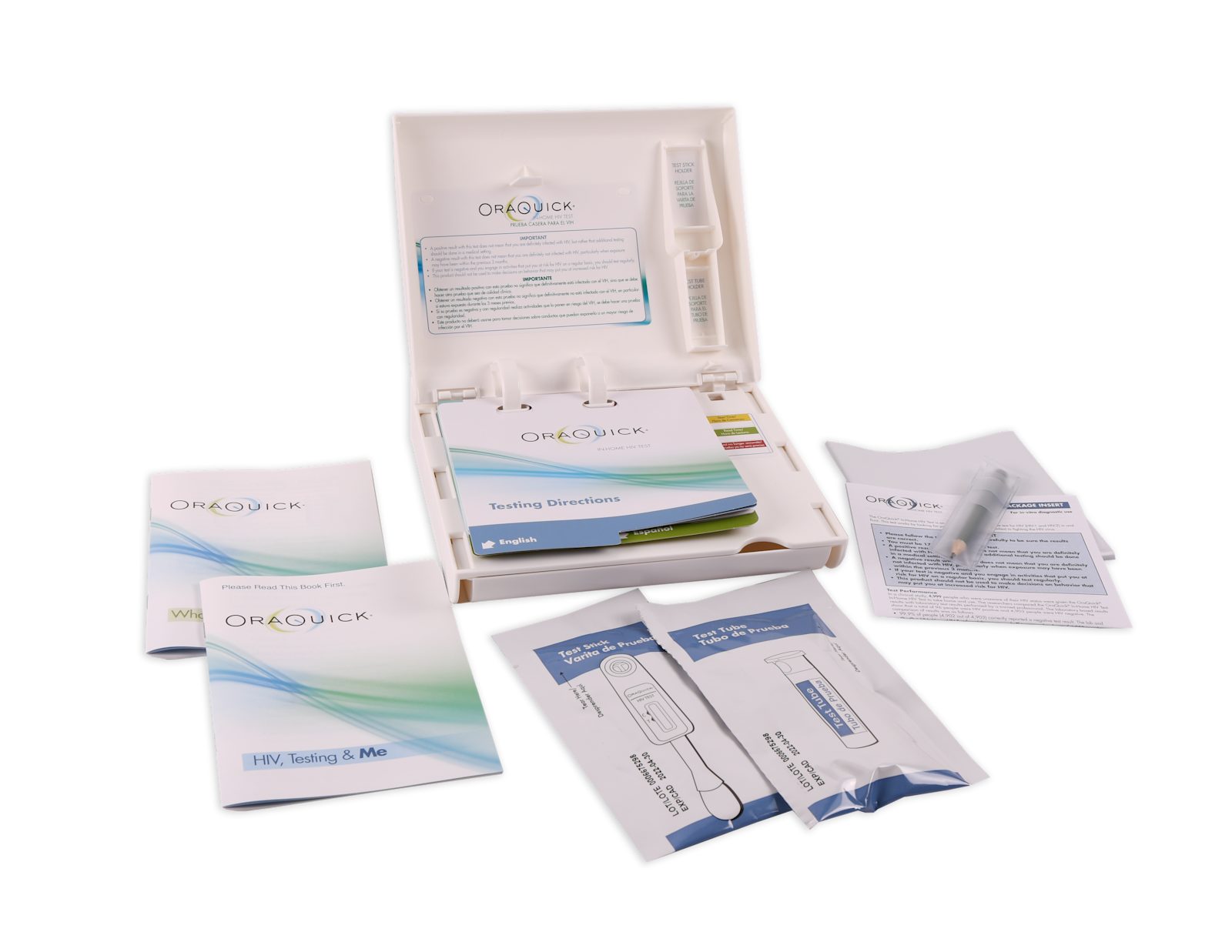
- Pre-test and post-test booklets that explain what your result means
Related tests
 At-home collection
STD Test - 5 Panel
Five common STIs, from a finger prick and a urine sample.
Loading price
Questions
Common questions.
Anything else, our care team answers by phone, text, or email.
HIV can infect anyone regardless of age, race, or sexual orientation, so screening guidelines highlight that it’s important to get tested at least once in your lifetime (the CDC recommends more frequent screening tests for people at a greater risk of getting an HIV infection). If you suspect that you may have been exposed to HIV, this test is a convenient way to check.
On average, nearly 40,000 individuals are diagnosed annually in the USA with HIV. The Centers for Disease Control and Prevention (CDC) estimates that just over 1 million people are living with HIV in the United States, but up to 13% don’t know they’re infected.
With the OraQuick® At-Home HIV Test, you can test quickly and privately in the comfort of your own home for HIV with results in 20 minutes.
According to the CDC, groups of people at increased risk for HIV infection include:
- People who engage in behaviors such as having unprotected (without condom or other barrier usage) vaginal or anal sex
- People who have another sexually transmitted infection
- People with multiple sexual partners
- People who use or share intravenous needles to inject drugs
Additionally, people who have sexual contact with a known HIV-positive partner are the most at risk for HIV transmission. Pregnant people infected with HIV can also pass the virus to their children during pregnancy.
By screening for exposure to HIV with this test, you can learn your HIV status. This may help people with positive results decide to pursue confirmatory testing, and then seek HIV treatment as soon as possible (if necessary), which also lowers their risk of infecting others. The OraQuick® At-Home HIV Test is simple and discreet, making this test a convenient option to check your exposure status.
Although many cases of HIV do not present with symptoms, it may be common to see them shortly after exposure. A few weeks after coming into contact with HIV, flu-like symptoms may occur, such as:
- Fever
- Headache
- Sore throat
- Swollen lymph nodes (small glands in your neck)
- Rash
- Tiredness
According to the CDC, these symptoms usually disappear within a week to a month. People with HIV may have no other symptoms for many years.
If left untreated, HIV will continue to affect your immune system and can progress to AIDS (acquired immunodeficiency syndrome). Symptoms of AIDS include:
- Extreme, unexplained tiredness
- Rapid weight loss
- Soaking night sweats
- Prolonged shaking chills or fever
- Prolonged swelling of lymph nodes (small glands in your neck)
- Chronic diarrhea
- Persistent headaches
- Unusual infections
There’s no cure for HIV. However, medication can slow the damage the virus causes by lowering the amount of HIV in your blood. Medication makes it possible to live a long life, one just as long as you would have without HIV. And in fact, recent studies show that HIV treated to an undetectable level is also likely untransmittable.
A positive result on this test is preliminary and does not necessarily mean you have HIV. In the case of a positive result, you should seek confirmatory testing in a medical setting like a clinic, doctor’s office, or you can consider in-person confirmatory HIV testing through Everlywell.
The CDC recommends everyone between the ages of 15 and 65 should be screened at least once for HIV. More frequent screening is often recommended for people who:
- Are sexually active and between the ages of 18 and 65
- Are men who have sex with other men, regardless of sexuality
- Have new or multiple sex partners
- Have had unprotected sex with someone at high risk of HIV
- Share or have shared injection drug needles
- Have symptoms of an STI
- Are concerned they’ve been exposed to an STI
- Have had another STI since their last test
- Have hepatitis or tuberculosis (TB)
A positive result on this test is preliminary and does not necessarily mean you have HIV. In the case of a positive result, you should seek confirmatory testing in a medical setting like a clinic, doctor’s office, or you can consider in-person confirmatory HIV testing through Everlywell.
Yes, this is a test you can take quickly and easily in the comfort of your own home with results in 20 minutes.
It can take up to 3 months for your body to produce HIV antibodies. This test detects those antibodies. This test may not detect HIV infections that have occurred within 3 months of a possible exposure. If you are on antiretroviral drugs (ARVs), including for HIV treatment, pre-exposure prophylaxis (PrEP), or post-exposure prophylaxis (PEP), you may get a false result.