About this test
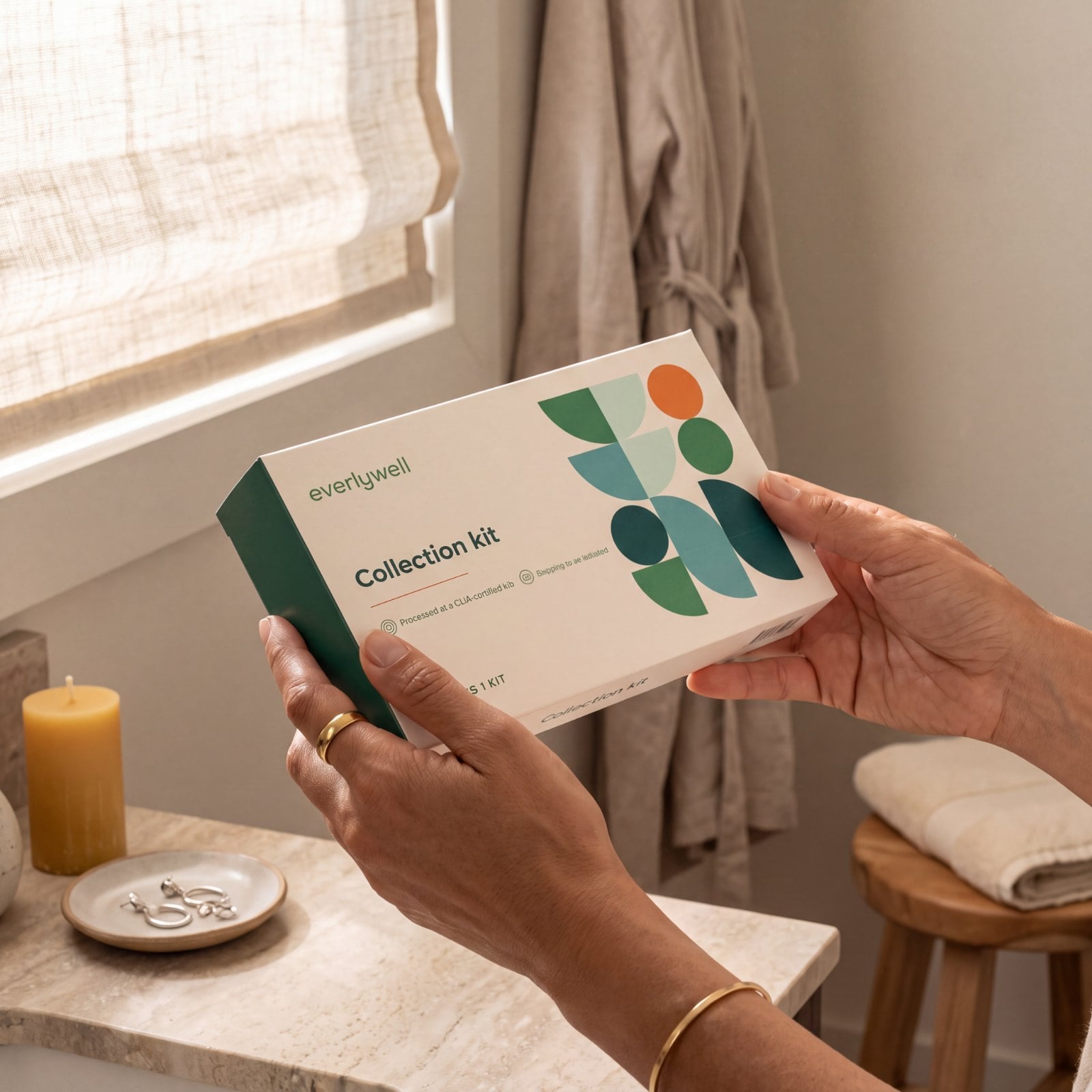
Our at-home lab test measures 10 key biomarkers and explains the hormones and antibodies that can affect your reproductive and general health.
- Measures levels of key female hormones
- Finger prick sample
- Saliva sample collection
Who should take this test?
Some people check hormone levels when discussing changes like fatigue, sleep or cycle changes with a provider. These symptoms have many causes.
Body
- Fatigue or feeling tired
- Joint pain
- Muscle weakness
- Increased body fat
- Night sweats
- Weight gain
- Cold or heat intolerance
- Abnormal hair growth
- Headaches
- Hair loss
- Skin issues (acne, dryness)
Mind
- Depression
- Difficulty concentrating
- Sleep disturbances
- Irritability or anxiousness
- Forgetfulness
Reproductive
- Irregular periods
What does this test measure?
Your results will provide detailed information on the 10 biomarkers (9 hormones and 1 antibody) measured and let you know whether those levels fall within established ranges for your reproductive stage.
- Estradiol
- Estradiol is the main form of estrogen in people assigned female at birth (AFAB) and is produced by the ovaries. It is one of the main sex hormones responsible for ovulation, which is vital to reproductive health and pregnancy in people who can get pregnant. After menopause, levels of estradiol decline significantly. Estradiol also plays a role in the development of bones and female-associated secondary sex characteristics development, as well as the optimal functioning of the brain and reproductive system.
- Progesterone
- Progesterone helps to maintain the endometrium, or lining of the uterus, and helps to support pregnancy. When an individual enters menopause and ovarian function declines, progesterone production significantly decreases.
- Luteinizing hormone (LH)
- Luteinizing hormone (LH) is a hormone produced by the pituitary gland that plays a critical role in ovulation and fertility. Mid-cycle, a sharp surge in LH causes a mature ovarian follicle—a small, fluid-filled sac containing an egg—to rupture and release the egg from the ovary for potential fertilization. Following ovulation, LH stimulates the remnants of the follicle to transform into the corpus luteum, which secretes progesterone to support early pregnancy.
- Follicle-stimulating hormone (FSH)
- Follicle-stimulating hormone, or FSH, is a hormone produced by the pituitary gland in the brain, which plays an essential role in the growth and maturation of ovarian follicles, as well as with ovulation and the menstrual cycle. Baseline FSH levels typically increase with age due to diminished ovarian reserve, and over time more FSH is then needed to stimulate ovarian function. FSH changes with life stage and is one of several hormones a provider may review. This test does not measure fertility.
- DHEA (dehydroepiandrosterone)
- DHEA, or dehydroepiandrosterone, is an androgen hormone that is produced by the adrenal glands, but in people assigned female at birth (AFAB), a small amount is also produced by the ovaries. It is a precursor to some other hormones in the body, such as testosterone and estrogen.
- Cortisol
- Cortisol is produced in the adrenal glands and is released in response to stressors like illness and exercise. Cortisol is often referred to as your body’s “stress hormone,” but it has many roles in the body, including helping to control blood sugar levels and regulating energy metabolism. In most people, cortisol levels peak in the morning and are lowest in the middle of the night. Your sample is collected 4 times throughout the day, and your results will reflect your cortisol levels during those times.
- Thyroid-stimulating hormone (TSH)
- Thyroid-stimulating hormone, or TSH, is a hormone produced by the pituitary gland that is responsible for controlling the production of the thyroid hormones T3 and T4 by the thyroid gland. The hormone TSH is considered the most sensitive marker for screening for thyroid diseases and conditions.
- Free T4
- T4 (thyroxine) is the predominant hormone produced by the thyroid gland. Levels of T4 fluctuate when individuals have an under- or overactive thyroid gland. This test measures free T4, the free (not bound to protein), and biologically active form of the hormone.
- Total testosterone
- In people assigned female at birth (AFAB), testosterone is primarily produced by the ovaries, with a small amount produced by the adrenal glands. A large portion of this testosterone is converted to estrogen by an enzyme called aromatase. Total testosterone includes free testosterone and testosterone that is bound to the proteins (e.g. albumin and sex hormone binding globulin) in the blood. While commonly regarded as the primary male sex hormone, testosterone is important for bone density, libido, body fat distribution, and supporting muscle mass across all sexes.
- Thyroid peroxidase (TPO) antibodies
- Thyroid peroxidase antibodies are antibodies that can bind to thyroid enzymes, which can suppress thyroid function. They are usually elevated in a condition called Hashimoto’s disease, which is the most common cause of hypothyroidism in the U.S.
Four steps, from your door to your results
- Day 1
Order and plan your timing
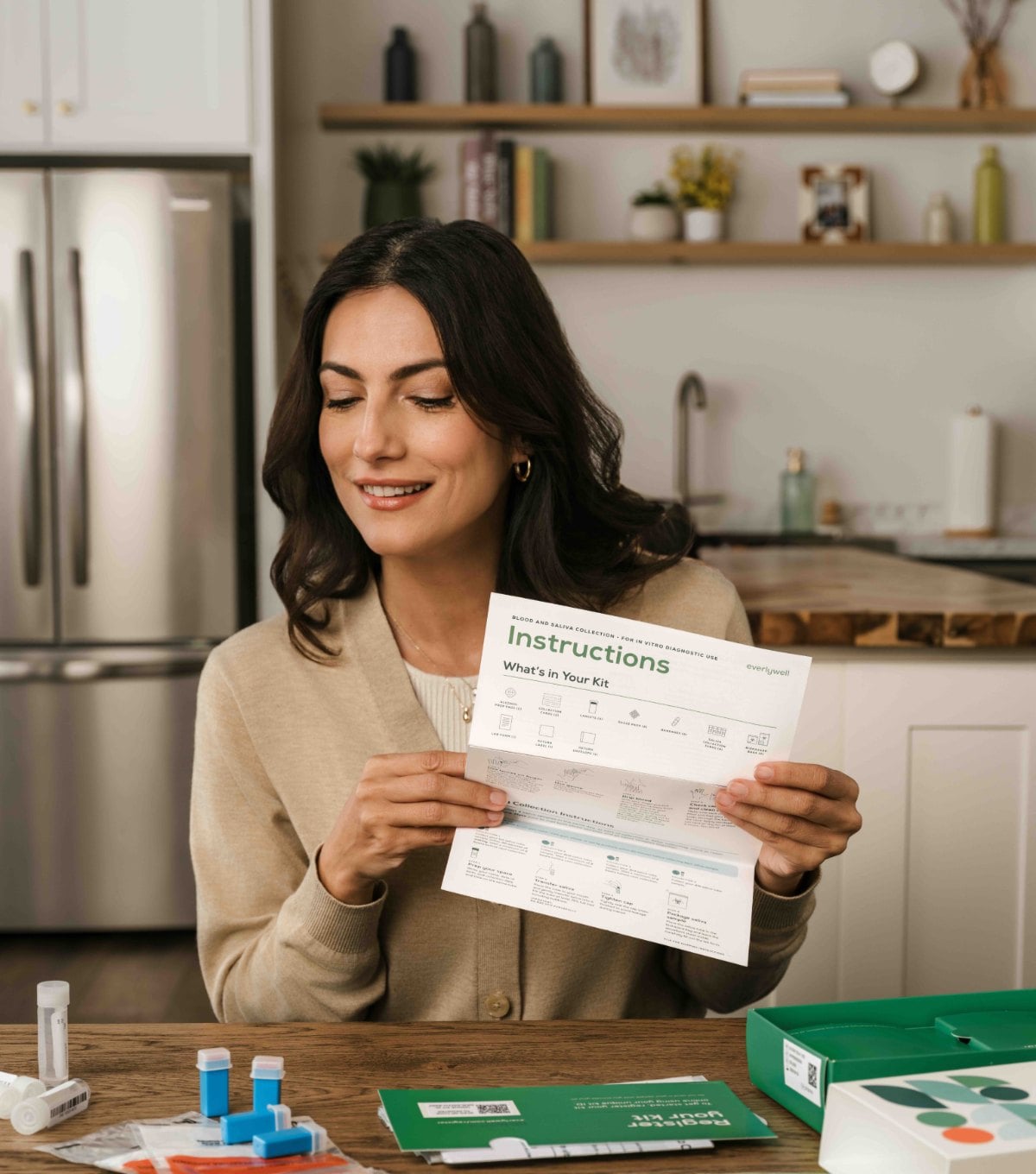
Order online and your kit ships free. When it arrives, read the instructions first: they explain which day to collect, timed to your cycle if you have one.
- Days 2 to 7
Register, collect, and ship
Register your kit ID online, then collect a few drops of blood on the card and four saliva samples at set times across one day. Mail it all back with the prepaid label.
- Days 10 to 14
Get your results
Physician-reviewed results post to your secure account, with each of the 10 biomarkers shown against the established range for your reproductive stage.
- After your results
Talk it through with your provider
Share your results with your healthcare provider, who can read them alongside your history and symptoms.
Using hormonal birth control or hormone therapy? Some medications and supplements can affect results. Check the FAQ below before you collect.
Clinical-grade testing, from the comfort of home.
From the lab to your report, every step of our process meets high standards in medical testing.
CLIA-certified labs
Every lab we partner with is certified under the Clinical Laboratory Improvement Amendments, meeting both state and federal standards with regular independent inspections.
We protect your health data
We protect your health data with encryption and do not sell it. Some results must be reported to public health authorities by law. See our Privacy Notice.
Rigorous quality assurance
All partner labs run regular internal quality checks, participate in proficiency testing, and comply with federal and state lab regulations.
Clinician-reviewed reports
Results are reviewed by an independent, licensed clinician.

See the full picture of your hormones.
- Measure 10 key biomarkers known to play important roles in women’s overall health
- A finger prick and saliva sample, collected at home.
- Free shipping both ways. FSA / HSA accepted.
- Free shipping both ways
- FSA / HSA accepted
Related tests
Questions
Common questions.
Anything else, our care team answers by phone, text, or email.
The list below shows medications and supplements that may affect test results, but it is not intended to be a comprehensive list of all medications, including hormonal therapies, that may affect your results. Please consult with your healthcare provider if you have questions about how your medication may affect test results.
Prescription: Mirena IUD, Skyla IUD, Kyleena IUD, Nexplanon, Combined Oral Contraceptive Pills, Progestin Only Oral Contraceptive Pills (MiniPill), Combined Hormone Replacement, Progestin Only Hormone Replacement, Estrogen Only Hormone Replacement (including vaginal), Spironolactone
Over-the-counter: Soy Supplements, Chasteberries, Red Clover, DHEAS, Thyroid Supplements
Note: If discontinuing hormone therapy, we advise waiting 6 weeks prior to collecting your sample. Don't stop prescribed medication without talking to your provider.
Our hormones are constantly changing and differences in levels can change how you feel day to day. Hormone levels outside of normal ranges can affect your menstrual cycle, mood, metabolism, libido, and sleep. Testing hormones is a critical step in understanding a woman’s reproductive and general health. Knowing if you have a hormonal imbalance is the first step to understanding the changes you may be experiencing in your body.
A 10-biomarker panel covering reproductive, thyroid and stress hormones, as a starting point to discuss with your provider.
This easy-to-use female comprehensive hormone panel will provide you with your levels of each of the 10 biomarkers (9 hormones and 1 antibody) measured in our Women’s Health test and whether your levels fall within established normal ranges for your life stage.
As with all of our tests, we encourage you to share your results with your healthcare provider as they can best offer guidance in your health and hormonal questions.
Here’s how to test hormone levels from the comfort of home:
The Everlywell Women’s Health test lets you easily check for 10 key markers all from the comfort of your own home. The kit includes everything you need, even a prepaid shipping label to send your samples to the lab.
This easy-to-use female hormone test can detect abnormal hormone and antibody levels, and it also includes detailed instructions for how to collect your blood and saliva samples.
To collect your blood sample, just prick your finger and apply a few drops of blood to the collection card. The saliva sample is collected by spitting into the saliva tubes provided in the kit.
You’ll then send your samples to the lab, and just days later, your test results will be ready to view on our secure, online portal.
Our at-home Women’s Health Test uses two sample types to check hormone levels: blood and saliva. Collecting both sample types is simple:
- Blood test sample collection only requires a simple finger prick
- For collecting your saliva sample, you just spit into the tube that comes with the kit
Saliva is a validated sample type for some hormones, including cortisol. Your provider can advise if blood testing is needed.
If a hormone panel test reveals that your hormones are outside normal levels (which can sometimes be referred to as a hormone imbalance), consider talking with your healthcare provider. A healthcare professional can take into consideration your medical history, a physical exam, and other factors to help you get the most value from your at-home lab test results.