
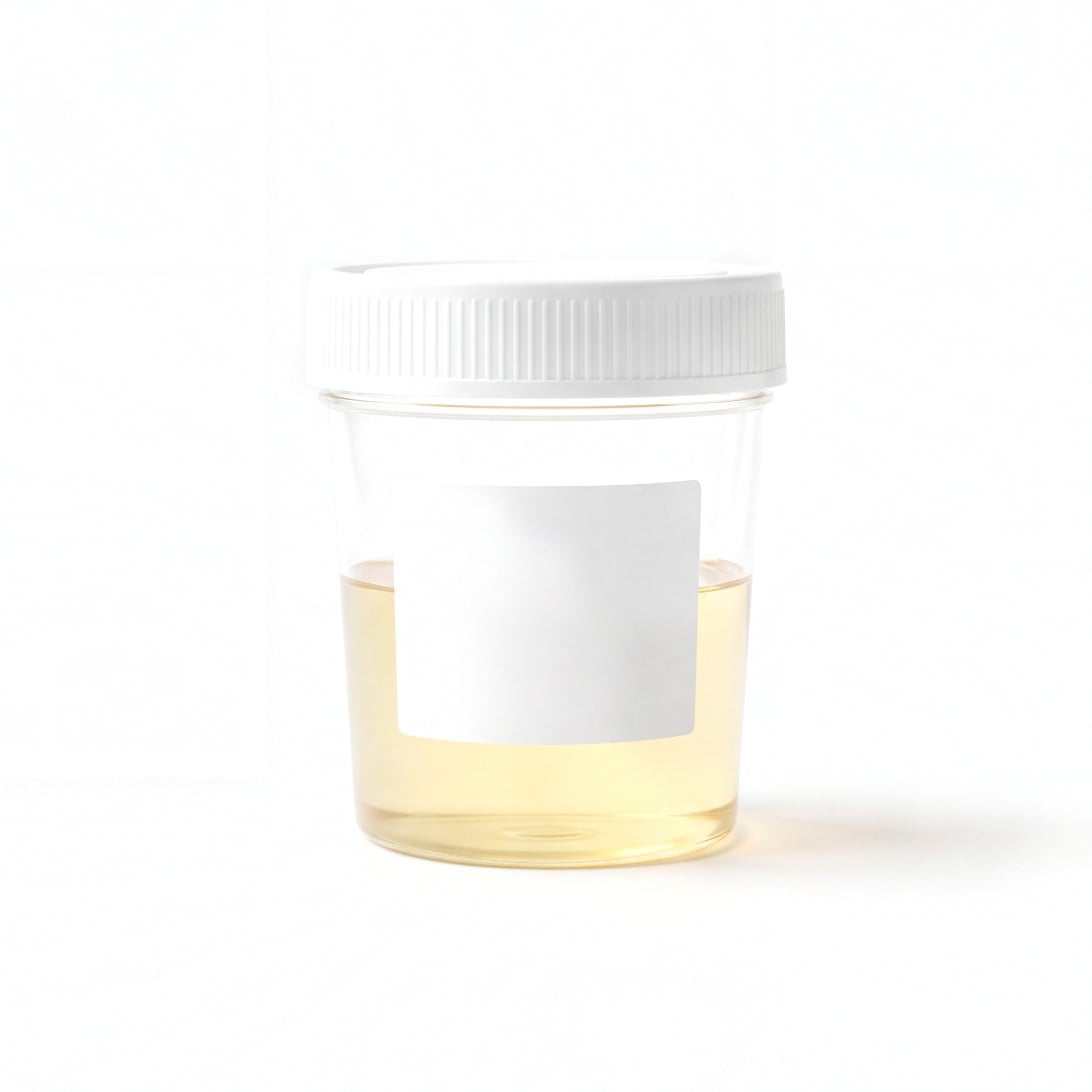
Urinalysis (Complete)
Urine chemistry plus a microscope exam, from one urine sample.
- 2,000+ lab locations. Find one near you
- Nothing due at the lab. FSA / HSA accepted
- Ordered by a licensed clinician
At a glance
- Collection
- Urine sampleCollected at your visit. No needle.
- Preparation
- NoneNothing to do ahead of time. Water is fine.
- Results
- 1 to 2 daysTypical turnaround after your visit.
- Where
- 2,000+ lab locationsNationwide, with nothing due at the lab.
About this test
A complete urinalysis looks at your urine three ways: its color and clarity, a chemical strip for things like protein, sugar, blood, and signs of infection, and a microscope check for cells, crystals, and casts. It is a common part of routine checkups. It does not add a urine culture.
For adults 18 and older. Test availability varies by lab location.

Who should take this test?
This test is for adults who want a routine urine check, or who have noticed urine changes or urinary symptoms and want a first look to share with a healthcare provider.
Ask about this test
Not sure this is the right test?
AI-generated. For information only, not medical advice. Call 911 for an emergency.
What does this test measure?
Your results show how your urine compares with typical findings for each measure, which can help a healthcare provider look at kidney health, blood sugar, and possible infection.
- Color and appearance
- The lab records the color and clarity of your urine. Color mostly reflects how concentrated it is, and it can also change with foods, vitamins, and medicines. Cloudiness can come from cells, crystals, or bacteria, so it is read with the other urinalysis results.
- Why it’s measured: A first look at how concentrated and how clear your urine sample is.
- Specific gravity
- Specific gravity measures how concentrated your urine is compared with water. It reflects how much you have been drinking and how well your kidneys concentrate urine. A provider reads it with your other results, since concentrated urine can make other values look higher.
- Why it’s measured: Shows how concentrated your urine is, which affects how other results are read.
- pH
- Urine pH shows how acidic or alkaline your urine is. It varies with diet, some medicines, and how your body is balancing acids. On its own it says little, but it can add context for kidney stones or a urinary infection when read with your other results.
- Why it’s measured: Shows how acidic or alkaline your urine is, which adds context to other results.
- Protein
- Healthy kidneys keep most protein in the blood, so urine usually has little or none. Protein in urine can appear for a short time with exercise, fever, or dehydration, and can also relate to kidney stress. A positive result is often rechecked before it is interpreted.
- Why it’s measured: Protein in urine can be a kidney signal, and a positive result is often rechecked.
- Glucose
- Glucose usually stays in the blood, and urine has little or none. Sugar can spill into urine when blood sugar runs high, and some medicines for diabetes, heart, or kidney conditions cause it on purpose. A positive result is read with a blood glucose or A1c result and your medicines.
- Why it’s measured: Sugar in urine is read together with a blood glucose or A1c result.
- Ketones
- Ketones are made when your body burns fat for energy instead of sugar. They can appear in urine with fasting, low-carbohydrate eating, intense exercise, or vomiting, and with high blood sugar in diabetes. A provider reads the result with your circumstances.
- Why it’s measured: Shows whether your body has been burning fat for energy instead of sugar.
- Bilirubin
- Bilirubin is a yellow substance made when old red blood cells break down, processed by the liver. It does not usually appear in urine. Finding it can relate to the liver or bile ducts, so a positive result is read with blood liver tests.
- Why it’s measured: Bilirubin in urine can relate to the liver and is read with blood liver tests.
- Blood (occult)
- This checks for red blood cells or hemoglobin in urine that may not be visible. It can be positive with menstrual blood in the sample, hard exercise, infection, or kidney stones, and for other reasons that a provider may want to look into. The microscopic exam adds detail.
- Why it’s measured: Checks for blood in urine that you may not be able to see with your eyes.
- Nitrite
- Some bacteria that cause urinary infections turn nitrate in urine into nitrite. A positive nitrite result can point to a bacterial urinary infection. A negative result does not exclude one, since not all bacteria make nitrite and urine needs time in the bladder.
- Why it’s measured: A positive result can point to a bacterial urinary infection, read with other results.
- Leukocyte esterase
- Leukocyte esterase is an enzyme released by white blood cells. Finding it in urine suggests white cells are present, which can happen with a urinary infection or inflammation. It is read with the nitrite result and the microscopic exam.
- Why it’s measured: Suggests white blood cells are in your urine, read with nitrite and the microscopic exam.
- Microscopic exam: white cells, red cells, epithelial cells
- Under the microscope, the lab counts white blood cells, red blood cells, and cells shed from the lining of the urinary tract. Higher counts can relate to infection, inflammation, or other changes. Skin cells in the sample can also show that it picked up contamination.
- Why it’s measured: Counts white cells, red cells, and lining cells in your urine under the microscope.
- Microscopic exam: casts and crystals
- Casts are tiny tube-shaped particles formed in the kidneys, and crystals form from minerals in urine. Some are common and harmless; others can relate to kidney conditions or a tendency to form stones. The lab reports what it sees for a provider to interpret.
- Why it’s measured: Looks for particles formed in the kidneys and mineral crystals.
- Microscopic exam: bacteria and yeast
- The lab reports any bacteria or yeast seen under the microscope. They can point to an infection, but they can also come from skin contamination during collection, which is why a clean-catch, midstream sample matters. A urine culture can identify the organism.
- Why it’s measured: Shows whether bacteria or yeast are visible, which a culture can then identify.
How it works
- Step 1
Order online
Check out here. A licensed clinician in your state reviews your order and sends it to the lab.
- Step 2
Visit a lab
Bring a photo ID to any of 2,000+ lab locations. No fasting needed, and nothing is due at the lab.
- Step 3
Get your results
Results post to your account, usually in 1 to 2 days, each number next to the lab’s reference range.
Find a lab near you
Choose from 2,000+ lab locations nationwide. Your order works at any of them.
What your results tell you
Each part is reported as negative or as a graded amount, or as a count seen under the microscope, and compared with the lab’s reference range.
- Your number next to the lab’s reference range
- Explained in plain language
- A licensed clinician reviews your order and, if appropriate, orders the test.
- A lab report you can download and share
A single finding outside the range can have several causes, so talk with a healthcare provider about your results and any next step.
Urinalysis or urine culture?
Urine tests that answer different questions.
Urinalysis
A broad check of your urine’s chemistry and cells.
- What it checks
- Chemistry, cells, and crystals, including signs of infection
- Useful for
- A routine check or a first look at urine changes
- Culture step
- Not part of this test; requested separately
Clinical-grade testing, from the comfort of home.
From the lab to your report, every step of our process meets the gold standard in medical testing.
CLIA-certified labs
Every lab we partner with is certified under the Clinical Laboratory Improvement Amendments, meeting both state and federal standards with regular independent inspections.
We protect your health data
We protect your health data with encryption and do not sell it. Some results must be reported to public health authorities by law. See our Privacy Notice.
Rigorous quality assurance
All partner labs run regular internal quality checks, participate in proficiency testing, and comply with federal and state lab regulations.
Clinician-reviewed reports
Results are reviewed by an independent, licensed clinician.
Related tests
 In person
Urinalysis with Reflex to Culture
Adds a culture if the results suggest infection.
Loading price- In person
Comprehensive Metabolic Panel (CMP)
Blood chemistry, including kidney markers and glucose.
Loading price
Questions
Common questions.
Anything else, our care team answers by phone, text, or email.
It has three parts. The visual exam notes color and clarity. The chemical strip checks for protein, glucose, ketones, bilirubin, blood, nitrite, and leukocyte esterase, and measures concentration (specific gravity) and pH. The microscope exam looks for cells, casts, crystals, and organisms such as bacteria or yeast.
The lab staff will guide you through a clean-catch, midstream collection at your visit, which helps keep the sample from being contaminated. There is nothing to do ahead of time, and water is fine. No needle is involved.
No. This test can show signs that point to infection, but it does not grow or identify bacteria. If you have urinary symptoms, the Urinalysis with Reflex to Culture runs a culture when the results suggest infection, and a Urine Culture can also be requested on its own.
No. This test is not for urgent care, and results take time. If urinary symptoms come with fever, chills, back or side pain, nausea or vomiting, blood you can see in your urine, or you feel very unwell, contact a healthcare provider or get urgent care right away.
A urinalysis gives clues, not a diagnosis. A finding like a trace of blood or protein can come from exercise, dehydration, or contamination of the sample, and one result can differ from the next. A healthcare provider decides whether a repeat test or other tests are needed.
Lab tests are informational and don’t diagnose conditions on their own. Available to adults 18 and older; test availability varies by lab location. A licensed clinician reviews your order and, if appropriate, orders the test. All testing is performed at CLIA-certified laboratories. Not for emergencies: if you think you may be having a medical emergency, call 911.