
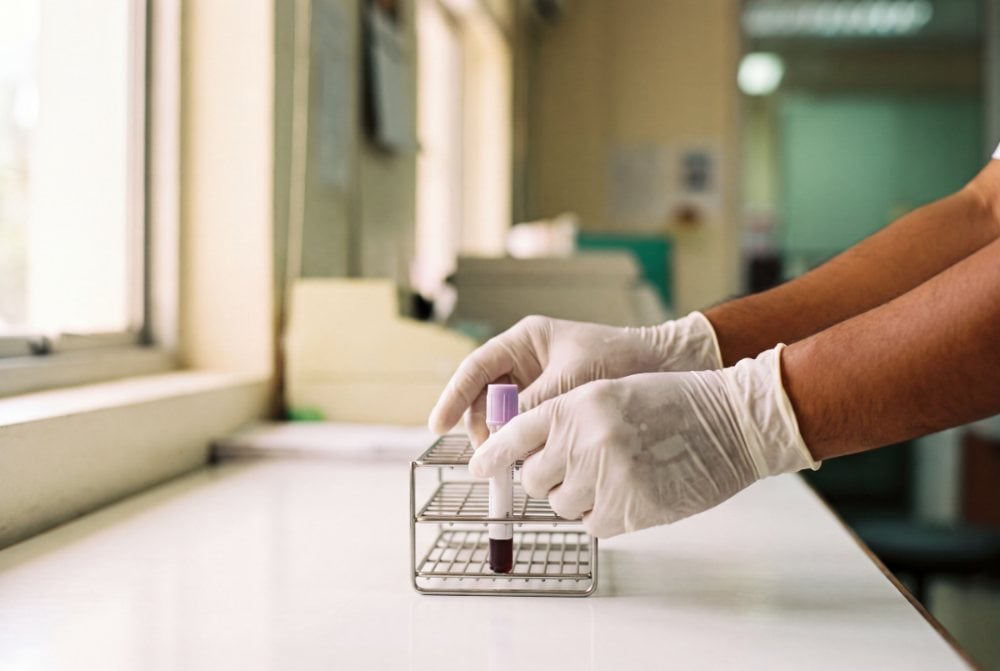
Prothrombin Time (PT/
How long your blood takes to clot, reported as an INR.
- 2,000+ lab locations. Find one near you
- Nothing due at the lab. FSA / HSA accepted
- Ordered by a licensed clinician
At a glance
- Collection
- Blood drawA standard blood draw at the lab.
- Preparation
- NoneNothing to do ahead of time. Water is fine.
- Results
- 1 to 2 daysTypical turnaround after your visit.
- Where
- 2,000+ lab locationsNationwide, with nothing due at the lab.
About this test
Prothrombin time (PT) measures how long a sample of your blood takes to form a clot in the lab. It reflects a group of clotting proteins, many of them made by the liver. The result is also reported as an INR, a standard scale that lets results be compared across labs. No fasting needed.
For adults 18 and older. Test availability varies by lab location.

Who should take this test?
This test is for adults following up on a known clotting result, checking clotting before a procedure at a healthcare provider’s request, or with questions about easy bleeding.
Ask about this test
Not sure this is the right test?
AI-generated. For information only, not medical advice. Call 911 for an emergency.
What does this test measure?
Your result shows how long your blood took to clot in the lab, compared with the lab’s reference range, which can help a healthcare provider understand bleeding or bruising questions.
- Prothrombin time (PT)
- Prothrombin time measures how many seconds it takes a sample of your blood to clot after the lab adds certain substances. It checks a group of clotting proteins made by the liver. It is affected by blood thinners such as warfarin, vitamin K levels, and liver function.
- Why it’s measured: Shows how long your blood takes to clot in a standard lab test of liver-made clotting proteins.
- International normalized ratio (INR)
- The INR is a standardized way of reporting prothrombin time so that results can be compared between labs. It is the number used when a prescriber monitors warfarin. Any change to blood thinner treatment is decided by your prescriber, not from a single result.
- Why it’s measured: A standardized clotting result that can be compared across labs.
How it works

- Step 1
Order online
Check out here. A licensed clinician in your state reviews your order and sends it to the lab.
- Step 2
Visit a lab
Bring a photo ID to any of 2,000+ lab locations. No fasting needed, and nothing is due at the lab.
- Step 3
Get your results
Results post to your account, usually in 1 to 2 days, each number next to the lab’s reference range.
Find a lab near you
Choose from 2,000+ lab locations nationwide. Your order works at any of them.
What your results tell you
PT is reported in seconds. INR is reported as a ratio without units that adjusts for differences in how labs run the test.
- Your number next to the lab’s reference range
- Explained in plain language
- A licensed clinician reviews your order and, if appropriate, orders the test.
- A lab report you can download and share
An out-of-range result can need prompt follow-up with a healthcare provider. If you take a blood thinner, follow your prescriber’s plan.
Clinical-grade testing, from the comfort of home.
From the lab to your report, every step of our process meets the gold standard in medical testing.
CLIA-certified labs
Every lab we partner with is certified under the Clinical Laboratory Improvement Amendments, meeting both state and federal standards with regular independent inspections.
We protect your health data
We protect your health data with encryption and do not sell it. Some results must be reported to public health authorities by law. See our Privacy Notice.
Rigorous quality assurance
All partner labs run regular internal quality checks, participate in proficiency testing, and comply with federal and state lab regulations.
Clinician-reviewed reports
Results are reviewed by an independent, licensed clinician.
Related tests
- In person
Liver Function Panel
Liver enzymes and proteins; the liver makes clotting proteins.
Loading price - In person
CBC with Differential
Platelets, red cells, and white cells in one routine count.
Loading price
Questions
Common questions.
Anything else, our care team answers by phone, text, or email.
INR stands for international normalized ratio. Labs use slightly different reagents to measure PT, so the INR converts the result to a standard scale. That lets results be compared across labs and over time.
No. If you take a blood thinner, your prescriber sets how and when your clotting is checked and decides any dose changes. This test does not replace that monitoring.
Do not change any blood thinner dose based on this result. Contact your prescriber with any questions about your dose or your results.
Some medicines, including blood thinners, can lengthen PT, and so can conditions that affect the liver, because the liver makes many clotting proteins. The sample also has to fill a special tube to the right level, which the lab location handles.
Don’t stop or change any medicine without talking with your healthcare provider.
PT checks one part of the clotting process. It does not measure platelets or all of the clotting proteins, and it does not check for a tendency to form unwanted clots. A result in range doesn’t answer all bleeding or clotting questions, so a healthcare provider may suggest other tests.
If you have bleeding that is heavy or won’t stop, get medical care right away rather than waiting on a test.
This test is not a substitute for the monitoring your prescriber sets. Do not change any blood thinner dose based on this result; contact your prescriber.